

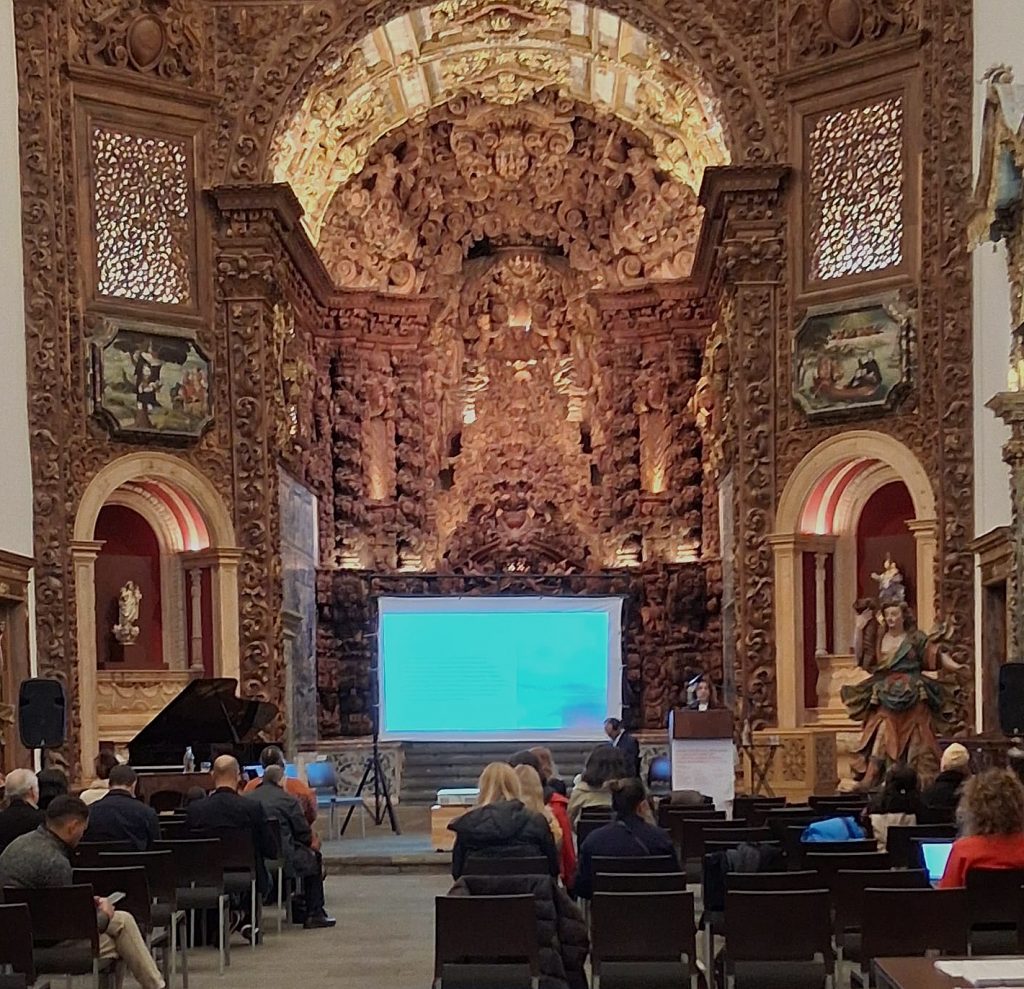
Clara Sarmento, Director of the Centre for Intercultural Studies (CEI) at ISCAP–P.Porto, participated by invitation in the 2nd Station (Annual General Meeting) of the COST Action CA23117 CIRCUL’ARTs, held at the Carlos Machado Museum, in Ponta Delgada, São Miguel, Azores, between 15 and 18 April 2026. This international meeting was dedicated to critical reflection on circular economies, inclusive artistic practices, and situated knowledge‑production methodologies. CIRCUL’ARTs – Connecting Critical Pedagogies, Inclusive Art Forms and Alternative Barometers for Urban Sustainability – is a COST Action (2024–2028) aimed at developing innovative methodologies for urban sustainability based on a dynamic ecology of knowledge, valuing community knowledge, artistic practices, critical pedagogies, and decolonial perspectives.
Within Working Group 3 – Urban installations and gathering points, Clara Sarmento presented the paper “Decolonial Art Practices for Circular Futures: Lessons from the Moliceiro Cultural Ecosystem”, which examined the cultural ecosystem of the moliceiro boats of the Ria de Aveiro as a model of territorially grounded circularity, rooted in traditional ecological knowledge, living heritage practices, and community‑based artistic creation. Based on more than two decades of ethnographic research, the presentation highlighted the role of moliceiro painted panels as co‑created visual narratives that articulate ecological memory, environmental critique, and narrative sovereignty. The case study aligns directly with the objectives of CIRCUL’ARTs by demonstrating how art, local knowledge, and the co‑creation of knowledge can act as key drivers for circular, socially just, and territorially embedded futures.
Visit: