

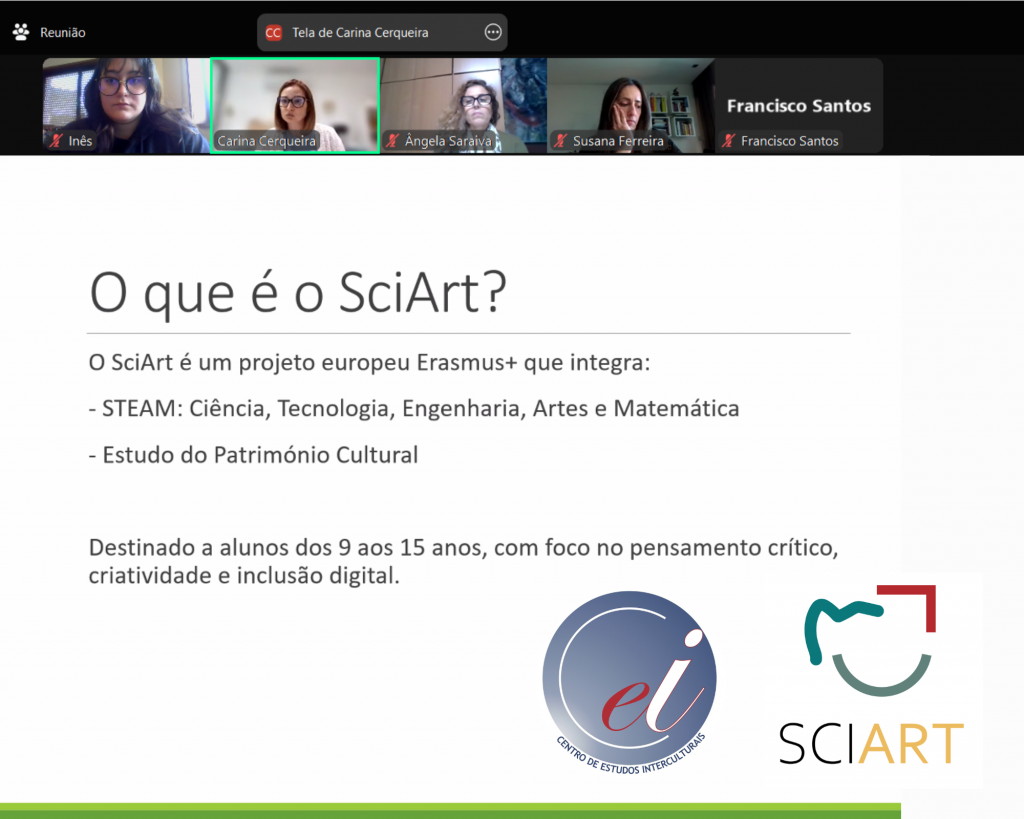
On 23 April 2025, ISCAP-P.Porto’s Centre for Intercultural Studies (CEI) successfully promoted the online training course ‘SciArt – STEAM, Cultural Heritage and Technical Skills’. Aimed at primary and secondary school teachers, the two-hour session took place in a digital environment, bringing together participants from all over the country in a veritable laboratory of creativity and innovation.
A student-centred, interdisciplinary approach
The training kicked off at 6.30pm with an engaging introduction to the SciArt method, which fuses science, technology, engineering, arts and maths (STEAM) with the study of cultural heritage. The teachers explored active, research-based pedagogical strategies to stimulate critical thinking and student participation in real projects.
Practical tools and materials for the classroom
In the second half of the session, each teacher received a digital kit of resources – lesson plans, artefact guides, interdisciplinary worksheets and activity suggestions. Thanks to these materials, it will be possible to implement SciArt workshops in the school itself, promoting narratives of local and European identity by analysing historical objects.
The future promises a live meeting
With the SciArt calendar already underway, participating schools are invited to prepare their projects until June 2025, when a live event will be held at a local museum. At this showcase, students and teachers will share results, experiences and prototypes, strengthening networking and academic visibility.
Benefits that make a difference
For the teachers, the training meant not only professional development and contact with a network of peers, but also access to opportunities to promote their schools. For the students, the SciArt activities promise to strengthen essential 21st century skills: teamwork, entrepreneurship, communication, self-knowledge and digital literacy.
“The combination of art and science opens doors to the active involvement of students”, said the trainers, emphasising the positive impact on motivation and learning.
Stay tuned for upcoming SciArt project initiatives at http://sci-art.eu and get involved in this educational revolution that puts cultural heritage at the centre of the classroom!